Quarterly Newsletter 2026

From the chairMEn's Desk

A season of momentum

Dear Members and Friends of IAICC,

As we launch our first quarterly newsletter of 2026, we are proud to share the momentum we are building and the direction we are shaping together. This year,
IAICC is taking focused steps toward one of the most defining priorities of our time: workforce readiness in an AI-driven world. Over the past few months, our events have provided several opportunities to engage with professionals across industries. We found that while awareness of artificial intelligence is growing rapidly, the ability to apply it effectively in real business environments is still developing. This gap is where both challenges and opportunities exist, and IAICC is keen on addressing it. 

Newsletters

QuaRterly newsletter 2026

The Indian American International Chamber of Commerce (IAICC) is dedicated to strengthening partnerships between U.S. and Indian businesses, promoting trade, innovation, workforce development, and community growth.

AI Workshop

AI Is No Longer the Future. It Is a Skill You Apply Today


What happens when professionals stop asking what AI is and start using it to shape their next career move? 

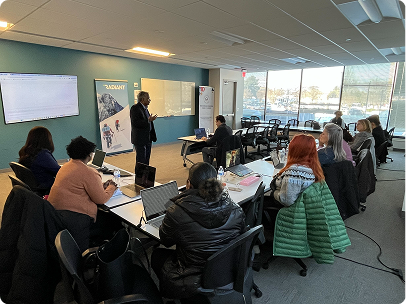
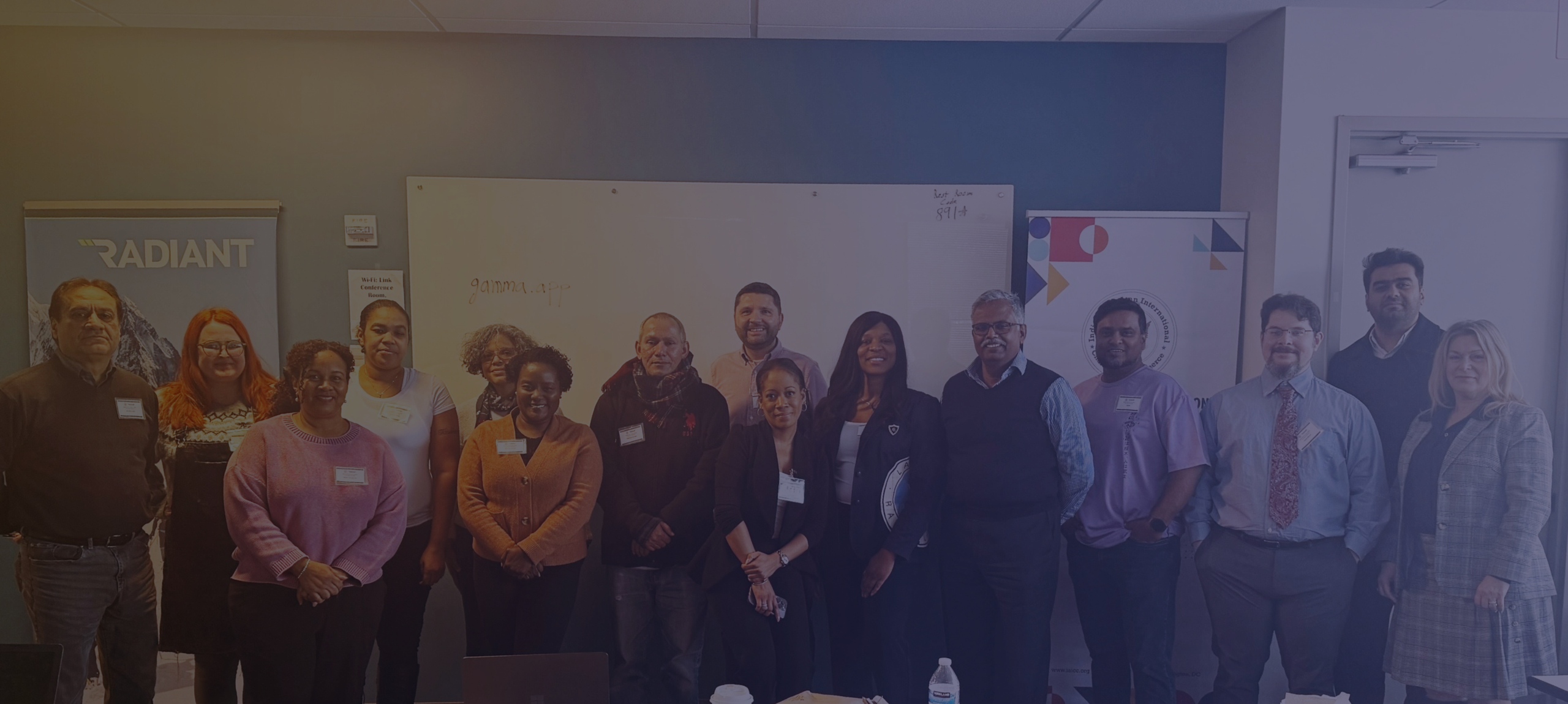
On January 29, 2026, that shift came to life in Vienna. The Indian American International Chamber of Commerce (IAICC), sponsored by Radiant Digital, hosted a full day immersive workshop on “Reskill with AI Tools and Skills for Career Transition”.  

Designed as hands on, execution focused experience, the workshop enabled participants to build practical, job-ready AI skills while bridging public and private sector perspectives. 

Setting the Direction for Workforce Transformation 

The workshop opened with a formal note by Dr. Shankar Rachakonda, Executive Chairman, IAICC US & Mid-Atlantic Region, who introduced IAICC’s mission and its AI Workforce Readiness Initiative. His message was clear: While Artificial Intelligence is rapidly transforming industries, workforce capability is not evolving at the same pace.  

The need is no longer awareness alone, but the ability to apply AI to improve operational efficiency, decision making, and service delivery. This workshop was designed as a direct response to that need, focusing on accessible, real-world learning rather than theory. 

From Understanding AI to Applying It 

Led by Kristan Smith, CEO of MND Suite Consulting and Alek Nedelkovski, Associate Director – Organizational Transformation & AI Enablement at Radiant Digital, the session moved quickly from concept to action. Participants worked through real tools and real scenarios, learning how to automate workflows, enhance productivity, and turn unstructured information into reusable, high value deliverables using a practical Responsible AI framework. 

The workshop focused on enabling participants to
• Understand core AI concepts and emerging trends
• Explore real world use cases across government and industry
• Identify practical applications within their own organizations
• Prepare for future workforce and career opportunities in AI 

No technical background was required. Participants arrived with laptops, engaged actively throughout the day, and gained skills they could immediately apply within their roles. 

Where Sectors Converge and Learning Becomes Real 

The workshop brought together a diverse group of participants including public sector professionals, government contractors, small and medium sized businesses, technology consultants, students, and early career professionals. 

This convergence created a dynamic learning environment where cross-sector perspectives shaped discussions and grounded AI applications in real world contexts. Participants engaged directly with experts, asked contextual questions, and explored how AI could be implemented within their specific professional environments. 

Closing the Gap Between Awareness and Execution 

A defining outcome of the workshop was its focus on closing the gap between understanding AI and implementing it effectively. By the end of the session, participants had moved beyond exploration to application, gaining clarity on how to integrate AI into decision making, workflows, and organizational processes. 

Advancing Workforce Readiness and Economic Competitiveness 

This workshop is part of IAICC’s broader Workforce Readiness Initiative, which focuses on preparing professionals, businesses, and communities for the future of work shaped by Artificial Intelligence, cybersecurity, and digital transformation. 

By equipping professionals with relevant, future ready skills, IAICC continues to support workforce modernization, accelerate technology adoption, drive economic growth and innovation, increase the competitiveness of small and minority owned businesses, and create meaningful career advancement opportunities. 

This effort also aligns with broader national priorities around workforce development, emerging technologies, and strengthening America’s technology leadership. 

Partnership That Enabled Practical Insight 

The workshop was conducted in collaboration with Radiant Digital, a technology solutions provider with deep expertise in enterprise transformation supercharged with AI. Their leadership and subject matter expertise enabled participants to gain practical insights into how AI is being applied across industries today. 

This partnership reflects IAICC’s commitment to working with industry leaders to deliver meaningful, high impact programs that create real value for the community. 

Building Pathways for the Future 

Following the strong response, IAICC is expanding its efforts through AI Fundamentals certification pathways, applied workforce training programs, industry focused learning cohorts, and hands on capstone experiences.  

These initiatives are designed to help participants build tangible skills and structured career pathways in emerging technology domains. 

Empowering Communities Through Access and Opportunity 

IAICC remains committed to empowering professionals, businesses, and underrepresented communities by providing access to knowledge, resources, and opportunities that enable long term success.  

Through initiatives such as this AI workshop, IAICC continues to strengthen its role as a platform connecting industry, government, and community to drive innovation and workforce advancement. 

Be Part of What Comes Next 

The success of the January 29 workshop highlights a clear shift. Professionals are no longer looking for information alone; they are looking for direction, capability, and community instead. 

IAICC will continue to host programs that translate learning into action and potential into progress. 

Join IAICC membership to access exclusive programs, hands-on workshops, and a growing network of professionals shaping the future of work. 

Learn how to prepare for GovCon and tech M&A in 2026. Discover buyer expectations, deal structures, and strategies to maximize business value.

Buying or Selling a GovCon / Technology Company in 2026? Here’s What Leaders Need to Know


In today’s evolving GovCon and technology environment, many founders are asking an important question: how should they prepare if they are considering scaling, acquiring, or selling their company? That question shaped a recent event hosted by the Indian American International Chamber of Commerce (IAICC), featuring Ms. Sharon Heaton, Founder and CEO of sbLiftOff. 

The evening began with opening remarks from Dr. Shankar Rachakonda, Founder and Chairman of IAICC, who shared the Chamber’s mission of supporting founders, entrepreneurs, and business leaders through education, connections, and strategic initiatives. That mission set the tone for a thoughtful and practical discussion that followed.  

A Strong Outlook for GovCon Mergers & Acquisitions 

During the session, Ms. Sharon Heaton shared that the outlook for mergers and acquisitions (M&A) in the GovCon sector remains strong. She explained that companies supporting defense, intelligence, cybersecurity, and other mission-critical areas continue to attract interest. 

Further, she noted that private equity firms are actively seeking acquisition opportunities and continue to invest in high-quality GovCon businesses. While the market is active, the discussion made clear that buyers are focused on specific characteristics when evaluating companies.  

What Makes a Company Attractive to Buyers? 

Ms. Sharon Heaton highlighted several factors that make companies more attractive to buyers. They are looking for companies with: 

  • Strong financial performance 
  • Long-term contract backlog 
  • Diversified customer bases 
  • Mission-critical capabilities 

The conversation emphasized that preparation and positioning play a significant role in how companies are evaluated.  

The biggest takeaway? Growth alone is not enough; operational maturity and predictable revenue streams are important considerations in today’s environment. 

How Deals Are Structured Today 

Ms. Sharon Heaton also walked attendees through how acquisition deals are typically structured. 

Most transactions include a combination of: 

  • Cash at closing 
  • Equity participation 
  • Performance-based components 

This blended approach allows founders to balance immediate liquidity with continued upside. For many sellers, staying involved in post-transaction, particularly through equity participation, can be a powerful way to benefit from future growth. 

It’s not only about selling, but also about structuring the right outcome. 

The Importance of Early Preparation 

If there was one theme that tied the entire conversation together, it was preparation. 

Ms. Sharon Heaton encouraged founders to: 

  • Strengthen financial reporting 
  • Build strong leadership teams 
  • Prepare early if they are considering a future transaction 

Preparation directly impacts both valuation and transaction smoothness. The earlier a company begins operating “exit-ready,” the more options it preserves, whether the goal is scaling further, bringing on investment, or pursuing a full acquisition. 

Engagement That Made the Difference 

The session was highly interactive, with founders and executives asking thoughtful, practical questions rooted in their own business journeys. 

As Ms. Sharon Heaton reflected afterward, what stood out most was the engagement in the room, a group of thoughtful, successful, and kind business leaders who transformed the event into a true dialogue. 

Looking Ahead 

Buying or selling a GovCon / technology company isn’t just a financial transaction. It’s a strategic decision that requires clarity, preparation, and the right guidance. 

Through important conversations like this, IAICC continues to provide founders and executives with practical insights, real-world perspectives, and meaningful connections. And if one thing became clear that evening, it was: “In a strong and selective M&A environment, the companies that prepare early are the ones that shape their own outcomes”. 

If you value meaningful conversations and strategic relationships like this, we invite you to explore IAICC membership. 


Application of the Rule of Two in Federal Procurement

The rule of two requires that all contracts above the micro-purchase threshold be set-aside for small businesses, provided there is a reasonable expectation that two or more responsible small business concerns would submit offers at fair market prices and those offers are competitive in terms of quality and delivery. Under the recent overhaul of the Federal Acquisition Regulation (FAR), the rule of two was retained for contracts above the simplified acquisition threshold (SAT), in addition to the statutory requirement that the rule apply to contracts between the micro-purchase and simplified acquisition thresholds. Notably, the revised FAR part 19 removes the requirement for the government to consider socioeconomic set-asides before small-business set-asides. Furthermore, the revised FAR 19.104, which was previously located at FAR 19.502-2, clarifies that, while small business set-asides are required at the master contract level under the rule of two, set-asides are encouraged but not mandatory at the order level for multiple-award contracts. It is also within the contracting officer’s (CO) discretion to follow the rule of two for orders issued under the Federal Supply Schedule (FSS).

The Government Accountability Office (GAO) has recognized in its bid protest decisions that following the rule of two for orders issued under the FSS program is entirely at the procuring agency’s discretion, and thus a non-protestable issue due to the inapplicability of FAR part 19 procedures to FSS procurements. In B-422776.2, a decision dated September 15, 2025, the GAO issued a dismissal for failure to state a valid basis of protest when the protester challenged the agency’s decision not to follow the rule of two for an order issued under the FSS program. The Department of State issued the underlying request for quotations (RFQ) to support its refugee processing center office operations to holders of the General Services Administration’s (GSA) Multiple Award Schedule (MAS) IT schedule contract. After conducting market research and obtaining approvals from the Small Business Administration (SBA) and the State Department’s Office of Small and Disadvantaged Business Utilization (OSDBU), the agency decided to conduct the procurement on an unrestricted basis. Later, following the issuance of Executive Orders 14163 and 14169, the agency decided to amend the solicitation, reduce overall staffing by 55 percent, and designate one of the nine functional areas as inactive. Despite the reduced level of effort, the CO decided to maintain the RFQ’s unrestricted status, noting that the program still needed a business capable of scaling to a $30 million annual contract.

Following the submission of revised quotations from GSA MAS IT vendors, the agency made an award decision, which was timely protested. Among other arguments, the protester contended that it was unreasonable for the agency not to conduct additional market research and perform a new rule of two analysis even after the scope of the requirements had been significantly reduced. In support of its argument, the protester cited the Small Business Act, 15 U.S.C § 644(a), as implemented by FAR 19.502, which is relocated to FAR 19.104 under the FAR overhaul. In this regard, while the protester did not argue that the State Department was required to set-aside the procurement, it nevertheless maintained that the agency was required to follow FAR part 19 procedures because the incumbent effort was itself a small business set-aside and the State Department had chosen to perform a set-aside analysis as part of its initial procurement strategy. Stated another way, the protester argued that by engaging in the process of making a set-aside determination, including obtaining SBA and OSDBU approvals, the agency had waived its discretion to follow FAR part 19 procedures and was now subject to the rule of two and other small business regulations.

Meanwhile, the agency requested dismissal of the protester’s allegation, noting that FAR part 19 procedures and provisions did not apply to FSS procurements. The GAO agreed with the agency, noting that the small-business rules under FAR part 19, including the rule of two, are not mandatory but are entirely at the discretion of the procuring agency for orders issued under the FSS program. The GAO pointed to its previous decisions holding that agencies are not required to follow FAR part 19 procedures when issuing orders under the FSS program. Additionally, FAR subpart 8.4, under which the procurement was conducted, specifically provides that FAR part 19 is not applicable to orders placed under the FSS program. Here, since the procurement was conducted as an FSS acquisition, FAR part 19 procedures did not apply. Therefore, the agency was not required to set-aside the requirement or even conduct a rule of two analysis for a set-aside in the first place. Similarly, the agency’s amendment to the solicitation in response to the reduced level of effort was also governed by the procedures of the FSS program, which did not require the agency to conduct a rule of two analysis before issuing the solicitation amendment. Consequently, the protester had failed to state an adequate legal ground for protest, resulting in the dismissal of the protest.

As implemented by FAR part 19, the rule of two requires that contracts over the micro-purchase threshold be set-aside for small businesses if two or more small businesses are reasonably expected to submit competitive offers. The revised FAR part 19 retains the rule of two for contracts above the micro purchase threshold, but with the clarification that the rule does not apply to orders issued under multiple-award contracts and the FSS program. The overhauled FAR part 19 makes this clarification in the set-aside requirements by changing the term “acquisition” to “contract” at FAR 19.104-1(a), thereby excluding orders issued under multiple-award contracts and the FSS program from the application of the rule of two. As was the case in the decision described above, the GAO will dismiss any protests that challenge a procuring agency’s failure to follow the rule of two at the order level for a multiple-award contract or the FSS program. Ultimately, contractors should remember that, while the rule of two remains mandatory for contracts above the micro-purchase threshold, for orders issued under multiple-award contracts and the FSS program, its application is entirely at the procuring agency’s discretion and thus may not be protested.

This Federal Procurement Insight is provided as a general summary of the applicable law in the practice area and does not constitute legal advice. Contractors wishing to learn more are encouraged to consult the TILLIT LAW PLLC Client Portal or Contact Us to determine how the law would apply in a specific situation.

Join IAICC’s Growing Network
Of Industry Leaders Today.

Federal Government Reopens After Historic Shutdown

Federal Government Reopens After Historic Shutdown: IAICC’s Perspective on Recovery and Policy Outlook

The U.S. government has officially reopened after a historic 43-day shutdown, allowing federal agencies to resume normal operations and enabling more than a million employees to return to work.  

With essential services, national institutions, and public programs restarting, communities across the country are beginning to recover from the disruptions experienced over the past several weeks. Back pay is expected to reach workers starting this weekend, offering much-needed relief for families affected during the closure. 

While reopening marks meaningful progress, the shutdown’s impacts continue to be felt in sectors such as air travel, tourism and small businesses, which are still working toward stability. Attention in the Senate is now shifting to an upcoming vote on health care tax credits.  

These credits help millions of Americans afford their monthly insurance premiums, and Senate Democrats secured a commitment for a vote next month. The outcome will determine whether these credits are extended or allowed to expire, which would lead to higher costs for many households. 

IAICC is hopeful that the end of the shutdown will create space for steady progress and constructive policymaking. We look forward to continued positive momentum that strengthens essential services and supports communities and working families nationwide.

Read more… 

Join IAICC’s Growing Network
Of Industry Leaders Today.

NRI Investment & LTCG Exemption Guide

How NRIs can Save Tax on Capital Gains from Investments in India?

When you invest in India, the profits you earn from selling capital assets are known as capital gains. These gains are taxed based on how long you hold the investments, short-term or long-term.  

But now here’s some good news: Indian Citizen and Persons of Indian Origin (PIOs) who are Non-Resident (NRIs) can claim a complete exemption on long-term capital gains (LTCG) under certain conditions.  

For Example, if an Indian resident invests ₹10 lakhs in the stock market and after a few years it grows to ₹20 lakhs, when he sells the stocks, then he will have to pay LTCG tax on the profit of ₹10 lakhs.  

But for NRIs, if they make investment in specified assets, they have to pay Zero tax on their capital gains.  

How NRIs can pay Zero % tax on Capital Gains?

  1. The money you are investing in the specified assets must be brought in convertible foreign exchange.  
  2. The sales proceeds are reinvested back in specified assets subject to a lock in period.  

Conclusion:

If you’re an NRI looking to grow your wealth through Indian investments, this is one of the most rewarding tax benefits available. You can legally pay zero tax on long-term gains by simply planning your investments and reinvestments.  

At KDP Accountants, we specialize in regularly assists NRIs investment planning, FEMA compliance, and tax filings to help them make the most of such opportunities. For any queries, reach out to us at enquire@kdpaccountants.com

Join IAICC’s Growing Network
Of Industry Leaders Today.

IAICC’s first-ever Special Virtual Event 2025

IAICC Hosts Its First-Ever Special Virtual Event: An Evening of Vision, Opportunity, and Collaboration

The Indian American International Chamber of Commerce (IAICC) marked a historic milestone on July 29, 2025, hosting its first-ever Special Virtual Event.
A landmark evening brought together industry leaders, entrepreneurs, and innovators to celebrate ideas, inspired collaboration, and showcased the power of the IAICC community.  

With engaging discussions, practical insights, and a vibrant exchange of perspectives, this inaugural event not only set a precedent but also left attendees energized for the future. 

The Evening Began with a Warm Welcome

The event opened with a thoughtful welcome from Glenn Falcao, Secretary of IAICC. His words set the tone for the night, extending heartfelt gratitude to attendees and creating an atmosphere of warmth and anticipation. Glenn’s introduction captured the essence of IAICC — a platform built on mutual respect, cross-cultural collaboration, and a shared vision for progress. 

Following this, Dr. Shankar Rachakonda, IAICC Treasurer, delivered an insightful chamber overview. He shared the mission, vision, and ongoing initiatives of IAICC, emphasizing its commitment to empowering Indian-American businesses globally. His overview reminded attendees that IAICC is not just a chamber — it’s a thriving ecosystem where ideas take root and flourish. 

The Energy Continued with Powerful Insights

The program moved seamlessly into engaging speaker sessions that blended expertise with inspiration. Each speaker added their unique perspective, turning the event into a mosaic of opportunities. 

Key Highlights Included:

  • Real Estate Insights & The One Big, Beautiful Bill – Expert speakers broke down the nuances of current real estate trends, opportunities for investment, and policy changes shaping the industry. The conversation touched on how the “One Big, Beautiful Bill” opens new doors for entrepreneurs and investors. 
  • Member Showcase – IAICC members shared their journeys, business success stories, and lessons learned. This segment reinforced the chamber’s role in connecting members with opportunities they might not otherwise access. 
  • Innovation in Business – Several speakers highlighted how adopting digital tools and adapting to global market trends can help businesses not just survive but thrive in today’s competitive environment. 

A Celebration of Collaboration

One of the most compelling aspects of the evening was its spirit of collaboration. The event became a meeting ground for people from diverse industries — real estate, technology, hospitality, education, and more. Attendees found common ground, sparked new ideas, and explored partnerships that could redefine their professional journeys. 

From casual conversations in breakout rooms to direct Q&A exchanges, the interaction wasn’t just about listening — it was about connecting. This energy reflected IAICC’s vision of being a true connector of people, opportunities, and ideas. 

Key Takeaways That Resonate Beyond the Event

The discussions and exchanges during the event left participants with valuable insights: 

  1. Global Mindset, Local Action – Success in today’s economy demands a global perspective paired with strong local execution. 
  2. Policy Awareness Is Key – Understanding legislation such as the “One Big, Beautiful Bill” empowers businesses to act early and seize new opportunities. 
  3. Networking Is Not Optional – Building and nurturing professional relationships is essential for sustained growth. 
  4. Innovation Is the Lifeline – Adapting to technological advancements ensures businesses remain competitive and relevant. 

The Day Wrapped Up with Gratitude

As the event drew to a close, speakers and participants reflected on the collective energy that had been built over the course of the evening. The conversations didn’t just end when the session concluded — they carried forward into post-event connections, follow-ups, and collaborative plans. 

The final moments were a celebration of community. IAICC expressed special thanks to Radiant Digital, the event’s valued sponsor, whose support made the evening possible. Radiant’s commitment to fostering innovation and empowering communities resonated deeply with IAICC’s mission. 

A heartfelt thank you was also extended to all IAICC members, attendees, and guest speakers for making this first-of-its-kind virtual gathering such a resounding success. Without their time, ideas, and enthusiasm, the event would not have had the same impact. 

Looking Ahead

This Special Virtual Event was more than just a meeting — it was the start of something bigger. It marked the beginning of a tradition where members, partners, and visionaries can come together to share, learn, and grow. 

With the success of this inaugural event, IAICC has set a new benchmark for virtual engagement. The chamber looks forward to hosting more such gatherings that not only provide practical insights but also strengthen the fabric of the IAICC community. 

Startup Pitch Event

Top Startup Pitch Competitions to Join

If you’re an entrepreneur looking to get your startup off the ground, few opportunities are as valuable as startup pitch competitions. These events give you the stage to pitch your big ideas, attract funding, gain expert feedback, and connect with investors, mentors, and fellow founders. 

But with so many startup pitch events happening globally, how do you choose the right one? 

In this article, we’ll break down what to look for in a pitch competition, spotlight some of the top contests for early-stage startups, and introduce you to the IAICC Startup Pitch Event, a standout opportunity for aspiring entrepreneurs ready to scale. 

What Is the IAICC Startup Pitch Event?

The IAICC Startup Pitch Event is a premier startup pitch competition held 2–4 times a year by the IAICC Tech Council. It offers a no-cost, high-value opportunity for students, faculty, and early-stage startups to present their innovative ideas in front of industry leaders, venture capitalists, and policymakers. 

Whether you’re building a concept in the classroom or turning your passion project into a startup, this event is designed to elevate your entrepreneurial journey. 

Why This Startup Pitch Event Stands Out?

Here’s what makes the IAICC Startup Pitch Event a top-tier choice for emerging founders: 

1. Open and Inclusive 

The event is open to students, faculty members, and early-stage startups from all sectors and backgrounds. There’s no cost to apply or participate, making it accessible to anyone with a great idea and the drive to pitch it. 

2. Held Multiple Times a Year 

With 2 to 4 events annually, you don’t have to wait for a single big day. You have multiple chances each year to prepare, apply, and pitch. 

3. Powerful Networking 

Participants gain direct exposure to industry leaders, VCs, angel investors, and key policymakers. These are the connections that can open doors for mentorship, funding, or partnership. 

4. Real Feedback from Real Experts 

Pitching is more than performance; it’s a learning experience. The panel of judges provides constructive feedback to help refine your idea and prepare you for what’s next. 

5. Mentorship and Pilot Opportunities 

Winners may receive mentorship, get introduced to funding partners, or explore pilot project opportunities with industry collaborators, turning their pitch into action. 

Who Should Apply?

This event is perfect for: 

  • Students who have an idea and want to test it in a real-world entrepreneurial setting are encouraged to use it. 
  • Faculty who are exploring innovation or supporting student-led initiatives. 
  • Early-stage startups seeking validation, connections, and growth without the burden of entry costs 

Whether you’re just starting or already building, if you have a promising concept and ambition to grow, this is your moment. 

How the Pitch Process Works?

The IAICC Startup Pitch Event is simple, transparent, and designed for maximum learning and exposure: 

Apply Online – Submit your idea through the IAICC website 

Shortlisting – Selected participants are invited to pitch live (virtually or in person) 

Pitch Your Idea – Present your solution to a panel of investors and industry experts 

Receive Feedback – Gain real-time insights to refine and improve your pitch 

Unlock New Opportunities – Winners may be matched with mentors, funders, or pilot partners 

What You’ll Gain?

1. Visibility in the Startup Ecosystem 

Position your idea in front of decision-makers from top industries across the U.S. and India. 

2. Expert Feedback & Growth Guidance 

Learn what works, what doesn’t, and how to pivot with confidence. 

3. Connections That Count 

Engage directly with VCs, angel investors, entrepreneurs, and IAICC mentors. 

4. Potential for Mentorship and Pilots 

Top participants may be selected for mentorship and connected to funding or pilot project opportunities. 

5. Confidence and Credibility 

Whether you win or not, the experience helps you polish your pitch and build entrepreneurial confidence. 

How to Make the Most of Your Pitch?

To help your idea shine during the pitch: 

  • Tell a story: Investors remember narratives, not numbers. Make your pitch relatable. 
  • Highlight the problem: Start with a real-world problem and your unique solution. 
  • Know your numbers: Investors will ask about traction, revenue model, and projections. 
  • Be concise: A 5–7-minute pitch should include your product, market, team, and ask. 
  • Rehearse: Practice with mentors or in front of peers. Feedback sharpens clarity. 
  • Be Ready for Questions: Judges want to test your logic, prepare for tough but constructive questions. 

Conclusion: Your First Step Toward Entrepreneurial Success Starts Here

In the fast-moving world of startups, visibility and mentorship are often more valuable than funding alone. The IAICC Startup Pitch Event delivers all three, without charging you a single rupee or dollar. 

Whether you’re a student with a concept, a faculty member guiding innovation, or a startup at the earliest stage, this pitch event offers a rare, no-risk opportunity to grow. 

Don’t wait for the opportunity to knock, pitch it. 

👉 Apply now to the IAICC Startup Pitch Event and take the first step toward building something great. 

Unbalanced Pricing & Associated Risks in Federal Contracts TILLIT LAW PLLC

Unbalanced pricing exists when, despite an acceptable total evaluated price, the price of one or more line items is significantly over- or understated. Federal Acquisition Regulation (FAR) 15.404-1(g)(2) instructs contracting officers (COs) to analyze offers with separately priced line items or subline items to determine whether the prices are unbalanced. If unbalanced pricing is detected, the FAR requires that the CO consider the risks to the government in making the award decision and whether the contract award will result in paying unreasonably high prices for contract performance. If the performance or pricing risks associated with unbalanced pricing rise to unacceptable levels, the procuring agency may reject the offer containing the unbalanced pricing. Alternatively, the agency may accept the offer with unbalanced pricing if, after conducting a risk assessment, it determines that the offer does not pose an unacceptable performance risk and that the government is unlikely to pay unreasonably high prices. The methodology and scope of an agency’s cost or price analysis are matters within the agency’s discretion, and the GAO only reviews the record to ensure that the evaluation is reasonable and consistent with the terms of the solicitation and the applicable law.

While both overstated and understated prices are relevant to an unbalanced pricing analysis, the primary risk the government assesses in this context is the risk posed by overstated prices. This is because low prices are not inherently improper and do not by themselves establish unbalanced pricing. Thus, to sustain a protest alleging unbalanced pricing, a protester must specifically identify one or more line or subline items and demonstrate that their pricing is significantly overstated. In B-421025.2; 421025.3, a bid protest decision issued by the Government Accountability Office (GAO) on July 6, 2023, the protester failed to identify any line items in the awardee’s proposal that contained overstated pricing. Instead, the protester merely observed that because the awardee had reduced its pricing on certain line items during discussions with the government, its pricing on other line items could now be overstated. Predictably, the GAO dismissed the allegation, noting that the protester had failed to meet the threshold requirement for proving unbalanced pricing because it could not demonstrate that any particular line item in the awardee’s proposal was overstated.

Furthermore, for unbalanced pricing to exist, the relevant proposed prices must be for line or subline items, rather than the total evaluated price (TEP). In B-422826, a bid protest decision issued by the GAO on November 20, 2024, the protester’s allegations of unbalanced pricing in a Defense Health Agency (DHA) contract were dismissed because they were solely related to differences between the TEPs. The offerors were required to provide prices for three “stepladder ranges,” for services involving healthcare environmental cleaning. The stepladder ranges included pricing for a base period, four option periods, a transition period, and a period for service extension. Each of these periods of performance represented a separate line item. The DHA added the proposed prices of all the line items to compute a TEP for each stepladder range. During the post-award protest, the protester alleged that the awardee’s pricing for stepladder 3 was unbalanced because it was inconsistent with its proposed pricing for stepladders 1 and 2. However, the GAO was unpersuaded by the protester’s argument because the stepladder prices represented TEPs and not pricing for individual line items. Consequently, the protester’s allegation of unbalanced pricing was dismissed because it could not demonstrate that the stepladder prices were for individual line or subline items.

It is also worth noting that, unless the solicitation specifically calls for it, unbalanced pricing evaluations are only mandated in FAR Part 15 procurements. In B-422081.2, a bid protest decision issued by the GAO on January 23, 2025, the underlying solicitation did not provide for the evaluation of proposed prices for balance. The acquisition was conducted under FAR 16.505, and the solicitation expressly stated that, regardless of the language used, the policies in FAR 15.3 did not apply to the ordering process. Following the award, the protester challenged the task order award, asserting, among other arguments, that the awardee’s pricing was materially unbalanced and that the procuring agency had failed to perform an unbalanced pricing analysis. The GAO dismissed the protester’s arguments, noting that the agency was not required to conduct an unbalanced pricing analysis because the solicitation did not call for it. Furthermore, the protester was reminded that the unbalanced pricing evaluations were not required in FAR Part 16 procurements. Consequently, the allegations regarding unbalanced pricing were dismissed due to the protester’s failure to state a valid basis for protest.

Even when unbalanced pricing is detected, the agency may waive the risks associated with it if they do not rise to unacceptable levels. Additionally, while the FAR generally instructs COs to utilize cost and price analysis techniques, it does not identify the precise manner in which a CO must assess proposals for risks associated with unbalanced pricing. In B-421311; 421311.2, a decision issued on March 15, 2023, the agency’s price analysis technique considered offered unit pricing that was more than 15 percent higher or lower than the average market price as unbalanced. Based on this methodology, the CO determined that the awardee’s pricing was unbalanced and proceeded to assess the risks associated with the unbalanced pricing. As a result of its risk assessments, the CO found that although the awardee’s proposed pricing was unbalanced, it did not pose an unacceptable risk of the government paying unreasonably high prices during contract performance. Furthermore, the CO determined that there was no risk of the awardee being unable to perform at the offered price. During the protest that followed, the GAO reviewed the unbalanced pricing risk assessment methodologies employed by the CO and found no reason to disturb the CO’s determinations. Consequently, the protest ground alleging unbalanced pricing was denied.

An offeror’s pricing is unbalanced when one or more line items are significantly over- or understated, despite an acceptable total evaluated price. Procuring agencies are required to conduct unbalanced price evaluations in FAR part 15 acquisitions and on proposals received in response to solicitations that call for unbalanced price evaluations. Once the agency determines that an offeror’s pricing is unbalanced, it proceeds to conduct a risk assessment to determine whether the unbalanced pricing poses an unacceptable price or performance risk. The GAO reviews for reasonableness both the agency’s determination regarding whether an offeror’s prices are unbalanced and the determination regarding whether the risks associated with the unbalanced prices are unacceptable. While both under- and overstated prices are relevant to an unbalanced pricing analysis, the primary risk the government is concerned with is the risk posed by overstated prices. Ultimately, contractors should remember that even when unbalanced pricing is detected, the procuring agency retains considerable discretion to waive any associated performance or pricing risks following a risk assessment, provided such risks do not rise to unacceptable levels.

This Federal Procurement Insight is provided as a general summary of the applicable law in the practice area and does not constitute legal advice. Contractors wishing to learn more are encouraged to consult the TILLIT LAW PLLC Client Portal or Contact Us to determine how the law would apply in a specific situation.

For any questions,
please contact us at

Follow us on social media for updates

Copyright © 2025 IAICC. All rights reserved.                                                  Archive